A home emergency kit is a small set of supplies kept in one place so that a power cut, a storm or a burst water main does not turn into a crisis. In Ireland the realistic scenario is not a disaster film. It is a winter storm that takes the electricity out for anything from four hours to a week, usually at night, usually when the shops are shut. This guide answers the questions people actually ask about that: what to keep, how much of it, how long food and water last, how to stay warm and informed, and what to do in the first ten minutes.
Jump to What You Need:
1. What Should Be in a Home Emergency Kit?
2. Backup Power: What a Portable Power Station Runs
3. How Much Water Should You Store?
4. Food and Cooking Without Power
5. What Is the Best Light for a Power Cut?
6. How Do You Stay Warm With No Heating?
7. Sleeping Bags and Emergency Bedding
8. How Do You Stay Informed and Contactable?
9. Carbon Monoxide, Smoke and Fire Safety
10. What Should You Do When the Power Goes Out?
11. What If You Have to Leave the House?
12. After the Storm: Drying Out and Clearing Up
13. Where to Start: The Three Things to Buy First
What Should Be in a Home Emergency Kit?
A home emergency kit should cover seven things: drinking water, non-perishable food, light, warmth, medication and first aid, a way to get information and charge a phone, and copies of your important documents. The Irish Government's Be Emergency Ready guidance uses those same seven headings. Most households already own about half of it. The difference between owning it and having a kit is that a kit is in one place and everyone knows where.
| Category | What to keep |
| Water | 2 to 3 litres per person per day, stored cool and dark, dates checked yearly |
| Food | Tins and dry goods that need no cooking, a manual tin opener, and anything specific for babies, pets or dietary needs |
| Light | At least two torches or a lantern, plus spare batteries in the right sizes |
| Warmth | Blankets, sleeping bags, hot water bottles, and a safe way to heat one room |
| Medicine and first aid | A few days of current prescriptions, a written copy of them, a basic first aid kit and hygiene supplies |
| Information and power | A battery, wind-up or solar radio, a charged power bank, and the right cables |
| Backup power | A charged portable power station if you rely on a fridge, a router or any powered medical equipment |
| Documents | Passports, birth certs, insurance details, medical information and emergency contacts in a waterproof bag |
| Utilities | Know where your gas and electricity shut-offs are, and write down your MPRN and GPRN numbers |

Where Should You Keep an Emergency Kit?
Keep it somewhere you can reach in the dark without stairs or a ladder. A hall press, the bottom of a wardrobe or a utility room shelf all work. An attic does not, and neither does a shed you would have to cross a dark wet yard to get to. Use one box or bag so nothing migrates, and tell everyone in the house where it is, including teenagers and anyone who stays regularly.
How Often Should You Check It?
Twice a year is plenty, and the easiest trigger is the clocks changing in March and October. Check battery dates, test the torches, rotate the water and any food approaching its date, and confirm the prescriptions inside are still the ones you take. October is the more important of the two, because it lands just before the Irish storm season.
Backup Power: What a Portable Power Station Runs
A portable power station is a large rechargeable battery with normal plug sockets and USB ports on the front. You charge it from the mains before you need it, and when the electricity goes it runs your fridge, your broadband router, your lights and your phones from that stored charge. It makes no noise, produces no fumes and is safe to use indoors, which is what separates it from a generator.
The short answer: a 1,000Wh power station will keep a fridge freezer, a broadband router, a few lights and everyone's phones going for most of a day. It will boil a kettle a handful of times, but it will not run electric heating, an immersion or a cooker for any useful length of time, because sustained heat is where the watts go.
How Big a Power Station Do You Need?
Two numbers matter and they do different jobs. Watt hours (Wh) is the size of the tank: how much energy is stored. Watts (W) is the size of the tap: how much can come out at once. A unit can have plenty of stored energy and still refuse to start a device that draws more watts than its inverter can deliver, so check both against what you actually intend to plug in.
As a rough guide, 250Wh to 500Wh covers phones, laptops, lamps and a router, which is enough for an evening: the Anker SOLIX C300X sits here at 288Wh and will hold a broadband router for about a day or charge a phone fourteen times over. 1,000Wh to 1,500Wh is the sweet spot for a household power cut, adding the fridge freezer and a night or two of margin, which is where the Anker SOLIX C1000 Gen 2 lands with 2,000W of output and a sub-10ms switchover that keeps a router from even dropping. 2,000Wh and above is for riding out a multi-day outage or running more at once, and the Anker SOLIX F1500 at 1,536Wh is the one we hold deepest for that. Our range currently spans roughly 245Wh up to 3,840Wh.
How Long Will a Power Station Run Your Fridge?
Roughly 8 to 12 hours from a 1,000Wh unit, and often longer in practice. A fridge freezer does not draw power continuously: the compressor cycles on and off, so although it might be rated at 150W it may only be running for a third of the time. Keeping the door shut is worth more than any amount of battery, because a full freezer holds its temperature for about 48 hours unopened.
| What you plug in | Typical draw | Rough run time from 1,000Wh |
| Phone | About 15Wh per full charge | 40 to 50 full charges |
| LED lamp or light strip | 5W to 10W | Well over 100 hours |
| Broadband router and ONT | 10W to 20W | 50 hours or more |
| Laptop | 45W to 65W | About 15 hours |
| Fridge freezer | 100W to 150W while the compressor runs | 8 to 12 hours, longer if the door stays shut |
| Electric kettle or fan heater | 2,000W to 3,000W while running | Around 8 kettle boils, or 20 to 30 minutes of continuous heating. Smaller units cannot start one at all |
| Powered medical equipment | Varies widely by device | Check the plate rating on your own device and ask your supplier what it needs |
Run times are approximate and depend on the appliance, the ambient temperature and how the unit is used. Check the rating plate on your own equipment.
Power Station or Generator?
A power station is the right answer for most homes. It works indoors, starts instantly, needs no fuel and no maintenance, and is quiet enough to sit in a hallway overnight. A petrol or diesel generator gives you far more power for far longer and costs less per watt, but it has to run outdoors, well away from doors and windows, because its exhaust contains carbon monoxide. If your priority is keeping a fridge, a router and phones alive through a storm outage, buy a power station. If you need to run heating, a workshop, a farm or a well pump, you are in generator territory, and we cover sizing, wattage and runtimes in detail in our guide to backup generators for Irish homes.
Can You Recharge One With Solar?
Yes, and most units take a folding solar panel directly. It is worth having for a long outage, because it turns a battery that runs down into one that keeps topping up. Be realistic about Irish winter light: a panel rated at 200W will deliver a fraction of that on a grey December day, so treat solar as a way to extend a power station rather than as the thing that fills it. Charge from the mains whenever the electricity is on, and keep the unit near full through storm season rather than flat in a press.
One habit worth building: a lithium power station left flat for months degrades. Plug it in when the clocks change, the same time you check the torches and the batteries, and it will be ready when a storm is forecast.
How Much Water Should You Store?
Store 2 to 3 litres of drinking water per person per day, and plan for three days as a minimum. For a household of four that is roughly 24 to 36 litres. That figure covers drinking and basic food preparation only. If you want to wash with it as well, or you are on a private well with an electric pump, store more.
| Household | One day | Three days |
| 1 person | 2 to 3 litres | 6 to 9 litres |
| 2 people | 4 to 6 litres | 12 to 18 litres |
| Family of 4 | 8 to 12 litres | 24 to 36 litres |
| Family of 5, plus a dog | About 12 to 16 litres | About 36 to 48 litres |
How Long Does Stored Water Keep?
Commercially bottled water carries a best-before date, usually one to two years out, and keeps well past it if the seal is intact and it has been stored cool and dark. Heat and sunlight are what degrade it, not time, so a case in a hot conservatory ages far faster than the same case under the stairs. Rotate it through normal use once a year rather than letting it sit for a decade.
Can You Just Fill Containers From the Tap?
You can, and it is worth doing when a storm is forecast, but it is a short-term measure rather than long-term storage. Use clean food-grade containers, fill them just before the event, and use them within a couple of days. If a boil water notice is in place in your area, tap water stored during it is not safe to drink untreated. Filling the bath is useful too, though that water is for flushing the toilet rather than drinking.
Food and Cooking Without Power
The food part of an emergency kit is two things: tins and dry goods you can eat without cooking, and a way to heat water and a meal when there is no electricity. Both are ordinary shopping rather than specialist kit, which is why this is the cheapest section on the list to get right.
How Do You Cook Without Electricity?
Bottled gas is the practical answer. A single or double burner portable gas stove running off a butane cartridge will boil a kettle and cook a dinner, which covers most of what you need. The Milestone Single Burner Portable Gas Stove is the one most Irish kitchen drawers end up with: piezo ignition, variable heat control, a windshield, and a pressure-sensitive cut-out that ejects the cartridge if it overheats. Use it on a stable, heat-proof surface with ventilation, never on a carpet or inside a tent, and never leave it unattended. Buy the cartridges at the same time as the stove, because a stove with no gas in the house is the single commonest gap in an otherwise decent kit.
A vacuum flask is the quiet winner here. Boil once, keep it hot, and you have tea and hot water for hours on one cartridge burn instead of four.
What Food Should You Actually Buy?
Buy things you already eat. Tinned beans, soup, fish, fruit and vegetables, pasta, rice, cereal, long-life milk, peanut butter, crackers, tea and coffee. The test is whether it is edible cold, because a kit that depends on cooking fails if the gas runs out. Include a manual tin opener, because an electric one is scrap metal in a power cut, and add a few treats: a week of tinned food is grim without biscuits.
What About Babies, Pets and Special Diets?
These are the parts people forget and they are the parts that cannot be improvised. Formula, baby food and sterilising equipment, pet food and a few litres of water for the animals, and anything a coeliac, diabetic or allergy-managed diet in the house depends on. If someone needs medication kept cold, work out now where that will go, because a cool box with frozen blocks is the usual answer and it wants to be in the house already.
What Is the Best Light for a Power Cut?
The best light for a power cut is a battery-powered LED lantern for the room you are sitting in, plus a handheld torch for moving around. Brightness is measured in lumens, and more is not always better: 500 lumens will light a yard, but a 750 lumen lantern dimmed to 75 will light a kitchen table for twenty hours on one set of cells. Buy at least two lights, because a torch is never in the room you are in when the power goes.
| Brightness | What it does | Typical form |
| 50 to 150 lumens | Find the fuse board, read a meter, get down the stairs | Keyring light, compact head torch |
| 200 to 400 lumens | General household use, working on something with both hands | Head torch, mid-size handheld |
| 500 lumens and up | Cross a dark yard, check a roof or an outbuilding, throw a beam 100 metres or more | Focus torch with a zoom head |
| Dimmable lantern, 75 to 750 | Light a whole room for hours, wind down to stretch the batteries | Camping lantern with a hook or handle |
Battery or Rechargeable?
For the emergency light specifically, battery wins. A rechargeable torch is excellent right up to the moment it is flat and there is no power to charge it, and the outage is exactly when you discover it has been sitting at 4% in a drawer since last winter. Alkaline cells sit unused for years and still work. Keep one rechargeable head torch by all means, because hands-free is genuinely better for fixing something: the Lighthouse 400 Lumen Elite Rechargeable Headlight runs up to forty hours on a charge and is rated IPX4, so it copes with going outside in the rain to look at a fuse board. Just do not let it be the only light in the house.
Practical picks from our range: the Lighthouse 500 Lumen Focus Torch runs on three AAA cells and throws 170 metres, and the Lighthouse 750 Lumen Camping Lantern is dimmable and takes C cells, which means twenty hours of table light on one set.
Are Candles Safe in a Power Cut?
Candles are a fire risk and should be a last resort, not a plan. Most house fires during power cuts start with a candle knocked over, left burning, or put too close to a curtain. If you do use them, put them in a stable holder on a hard surface away from anything that can catch, never leave one in a room you are not in, and never leave one lit overnight or anywhere a child or a pet can reach. An LED lantern costs less than a decent set of candles and does not burn the house down.
What Batteries Do You Actually Need?
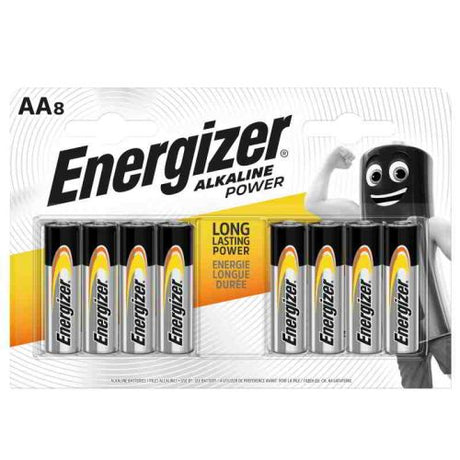
Check before you buy, because it is almost never all the same size. Small torches and head torches usually take AAA, mid-size handhelds take AA, lanterns commonly take C or D cells, and most smoke and carbon monoxide alarms take a 9V or AA. A kit with four torches and only AA spares is a kit with three dead torches. Buy a pack of each size your devices use, keep them with the torches rather than in a separate drawer, and replace them on the same twice-yearly check.
How Do You Stay Warm With No Heating?
Heat one room rather than the house, close the doors and curtains, and add layers before you add appliances. Most Irish central heating needs mains electricity to run its pump and controls even when the boiler burns oil or gas, so a power cut usually means no heating at all. The three things that work without electricity are a gas heater running off a cylinder, a solid fuel fire or stove if you have one, and a traditional hot water bottle filled from a gas stove.
What Does Not Work in a Power Cut
This is worth being blunt about, because it catches people out. An electric blanket does not work. A rechargeable electric hot water bottle does not work once its charge is gone. A fan heater, an oil-filled radiator and an infrared panel all need the mains. Even a pellet stove usually needs power for its auger and fan. All of these are excellent through a cold snap when the electricity is on, and none of them is a power cut plan.
Are Gas Heaters Safe to Use Indoors?
Only models specifically designed for indoor use, and only with ventilation. An indoor-rated portable gas heater must have an oxygen depletion system, which shuts the heater off automatically before carbon monoxide can build to a dangerous level, and flame failure protection, which cuts the gas if the flame goes out. Heaters sold for camping, fishing or sheds are rated for outdoor or well-ventilated semi-outdoor use only and should never be used as indoor heating.
Even with an indoor-rated heater: keep a window or trickle vent open, never run one in a sealed room, never use one in a bedroom overnight, keep it clear of curtains and furniture, and let it cool fully before changing the cylinder. Fit a carbon monoxide alarm in any room you run it in. A 3kW to 4.2kW heater will hold a normal sitting room, and most models have two or three settings so you are not committed to full output. The De Vielle 4.2kW Portable Gas Heater is the one we stock deepest for storm season: three settings from 1.2kW to 4.2kW, a ceramic burner, castors so it moves between rooms, and both of the safety features above.
How Do You Keep a Room Warm for Free?
Pick one room, ideally a small one with a south-facing window, and move everyone into it. Close the doors to the rest of the house and shut the curtains once it is dark, because a lot of heat leaves through glass. Block the draught under the door with a rolled towel. Layer clothing rather than wearing one thick jumper, since trapped air between thin layers insulates better. Eat and drink something hot if you can make it. Keep moving a little rather than sitting still for hours.
A traditional rubber hot water bottle filled from a camping kettle is the cheapest warmth in the house and needs nothing but a gas ring. Look for natural rubber with a removable cover, like the Diamond Plush Hot Water Bottle, rather than a rechargeable electric one. Check anyone elderly, very young or unwell more often than you think you need to, because cold affects them faster and they are less likely to say so.
Sleeping Bags and Emergency Bedding
A sleeping bag is the most efficient warmth you can store, because it insulates on all sides and packs down to almost nothing. In a house with no heating, a sleeping bag on top of an ordinary bed is warmer than piling on blankets, and it is the one piece of bedding that still works if you have to move to a relative's floor or sleep in the car.
Why a Sleeping Bag Beats Extra Blankets
Blankets lose heat at the edges and slide off in the night. A sleeping bag traps a sealed pocket of air around you, with no gaps at the sides or the feet, so the same weight of material keeps you considerably warmer. It also has the advantage of being one item: it goes in the emergency box, comes out intact, and does not need to be found in three different presses at two in the morning.
What Season Rating Do You Need in Ireland?
For emergency use in an unheated Irish house, a 2 to 3 season bag is the sensible middle. Irish winters are damp rather than severely cold, and indoor temperatures in a power cut usually fall to somewhere between 10 and 15 degrees rather than to freezing, so a bag built for alpine conditions is more than you need and more expensive than it needs to be.
| Season rating | What it is built for | Use in a power cut |
| 1 season | Indoor use and warm summer nights | Fine for children sharing a heated room, light for anything else |
| 2 season | Spring and autumn, mild nights | Adequate for one cold night indoors with layers on |
| 3 season | Most of the Irish year, including cold nights | The practical choice for an emergency box |
| 4 season | Winter camping and near-freezing conditions | More than a house needs, but the right call if you may sleep in a car |
What Else Belongs in the Bedding Box?
A foam roll mat or a folded duvet underneath matters more than people expect, because most of the heat you lose at night goes downwards into the floor or the mattress. Add a spare fleece blanket for each person, a pair of thick socks kept with the kit rather than in a drawer, and a hat, since a surprising amount of heat leaves through an uncovered head. Foil emergency blankets are worth having in the car but are not comfortable to sleep in and should be treated as a backstop.
Store the whole lot dry and loosely packed. A sleeping bag left compressed in its stuff sack for years loses loft, which is the trapped air that does the insulating, so keep it in a pillowcase or a large bag rather than crushed down.
Shop Sleeping Bags and Tents ›
How Do You Stay Informed and Contactable?
Keep a radio that does not need the mains, and a way to charge a phone that does not need a wall socket. This is the line most Irish households genuinely do not have. When the power goes, local radio is how you find out what happened, which areas are affected and when it is coming back. A smart speaker is useless, a DAB clock radio plugged into the wall is useless, and a phone at 12% is not a plan.
Why a Radio and Not Just a Phone?
Because the mobile network often goes with the power. Masts have battery backup, but it is measured in hours rather than days, and in a widespread storm outage the network can degrade or drop entirely across a rural area. Radio transmitters are far better protected and stay up. A battery radio also uses a fraction of the power a phone does to receive the same information, so it saves the phone battery for the calls that matter.
Wind-Up, Battery or Solar?
A wind-up radio needs nothing at all, which is the whole argument for it: no batteries to have gone flat, no charge to have forgotten. A battery radio is simpler and usually sounds better, and works perfectly well as long as you keep spare cells. Solar charging is a useful third route on a wind-up model but is slow in Irish winter light, so treat it as a top-up rather than the main method. The best emergency radios do all three.
From our range, the Philips Emergency Radio TAR1609 is the one that covers every base: AM and FM, a hand crank, a solar panel, USB-C charging, AAA batteries as a fallback, a built-in torch, an SOS siren, and a USB-A port so it can put a little charge back into a phone. If you prefer something simpler, the Panasonic RF 2400 is a straightforward battery AM/FM set with a large speaker and a proper tuning dial. Stock on both moves quickly through storm season.
How Do You Keep a Phone Charged?
A charged power bank is the simplest answer and costs very little. A 10,000mAh unit gives roughly one and a half full phone charges, and a 24,000mAh unit about four. Charge it now rather than when you need it, and check it twice a year with everything else. To stretch what you have: turn on low power mode, drop the screen brightness, switch off Bluetooth and background app refresh, and use texts rather than calls, since a text will often get through when a call will not. For anything longer than a day or two, or if you need to keep a fridge and a router running as well, that is a portable power station question rather than a power bank one.
Carbon Monoxide, Smoke and Fire Safety
Carbon monoxide is a colourless, odourless gas produced when any fuel burns incompletely, and an alarm is the only way to detect it. This section matters more the moment you start following the rest of this guide, because a household that brings a gas heater, a camping stove and candles indoors has just created several new sources of both fire and carbon monoxide. If you buy one thing off this page, buy a carbon monoxide alarm.
| Alarm type | What it detects | Where it goes |
| Carbon monoxide | CO gas from any fuel-burning appliance | Any room with a boiler, stove, open fire or gas heater, and near sleeping areas |
| Optical smoke | Slow smouldering fires, the common household type | Hall and landing, one per floor as a minimum |
| Heat | A rapid temperature rise rather than smoke | Kitchens and garages, where a smoke alarm would false-alarm on cooking |
| Fire blanket | Not a detector, it smothers a small fire | Kitchen wall, within reach but not directly above the hob |
What Are the Symptoms of Carbon Monoxide Poisoning?
The common early symptoms are headache, dizziness, nausea, tiredness and breathlessness. They are frequently mistaken for flu or a hangover, with one telling difference: carbon monoxide poisoning does not cause a fever. Two signs that should make you act immediately are symptoms that improve when you leave the house and return when you come back, and more than one person or a pet in the house feeling unwell at the same time. Higher exposure can cause confusion, collapse and loss of consciousness.
If you suspect carbon monoxide, get everyone out into fresh air straight away, do not switch anything on or off, and ring the Gas Networks Ireland 24 hour emergency line on 1800 20 50 50. If anyone is unwell, ring the emergency services on 112 or 999 and tell a doctor you suspect carbon monoxide exposure. There is general information and guidance at carbonmonoxide.ie.
Where Should You Fit a Carbon Monoxide Alarm?
Fit one in every room containing a fuel-burning appliance, which means a boiler, a gas cooker, a solid fuel stove, an open fire or a portable gas heater, and fit another near sleeping areas. Carbon monoxide mixes fairly evenly with air, so it can go on a wall or a ceiling; follow the manufacturer's instructions for the exact height and for how far it should sit from the appliance. Look for an alarm certified to EN 50291, and choose a sealed ten-year battery model if you would rather never think about it again. Test it monthly and replace the whole unit at its end-of-life date, since the sensor expires whether or not it has ever alarmed.
What Should You Do If a Carbon Monoxide Alarm Sounds?
Treat it as real every time. Open doors and windows, turn off the appliance if you can do it safely on your way past, get everyone and any pets out into fresh air, and do not go back in until it has been checked. Ring the Gas Networks Ireland emergency line on 1800 20 50 50, and 112 or 999 if anyone is unwell. Do not silence the alarm and go back to bed, and do not assume it is a false alarm because nobody feels sick yet. Have the appliance checked by a Registered Gas Installer or a qualified technician before using it again.
Why Does My Alarm Keep Beeping?
A single chirp every 30 to 60 seconds is almost always a low battery, or an end-of-life warning on a sealed unit whose sensor has expired. Repeated rapid beeps are the actual alarm and mean you should act on the advice above. Smoke alarms famously start chirping at three in the morning because falling overnight temperatures drop the battery voltage below the threshold; replace the battery rather than pulling it out, and if the chirping continues with a fresh cell, the alarm has likely reached the end of its life, typically ten years from the date on the back.
If you are buying one thing, make it a carbon monoxide alarm: the Kidde K5CO Carbon Monoxide Alarm is certified to EN50291-1:2018, monitors continuously, ships with its batteries and warns you when it reaches end of life. If you need smoke cover too, the Kidde COSAC Essential Alarm Pack pairs a CO alarm with an optical smoke alarm in one box. For fire, the Safeline Fire Safety Kit 3 Pack covers the ground quickly with a one metre fire blanket, a 1kg extinguisher and a ten-year smoke alarm together, and the rest of our home safety range fills in heat alarms and sealed ten-year CO units. A small first aid kit is worth adding while you are at it, along with a written copy of any repeat prescriptions.
What Should You Do When the Power Goes Out?
Check your own fuse board first, then check whether it is just you, then report it and settle in. The order matters, because a tripped RCD in your own house looks identical to a network fault from the inside and is fixed in ten seconds.
The first ten minutes. Check the trip switches on your fuse board. Look out the window to see whether neighbours have lights. Check the ESB Networks PowerCheck map on your phone for faults and restoration estimates in your area. Report the fault if it is not already listed. Leave the fridge and freezer shut. Switch off and unplug sensitive electronics, but leave one light switched on so you know the moment power returns. Get the torches and the radio out before it is fully dark.
Who Do You Call About a Power Cut in Ireland?
Call ESB Networks, not your electricity supplier. ESB Networks runs the wires regardless of who you buy your electricity from, and their 24 hour emergency and fault line is 1800 372 999. Their PowerCheck map shows current faults, the number of customers affected and an estimated restoration time, which is usually faster than getting through by phone. If you see a fallen or damaged line, stay well back, keep others away and report it immediately as an emergency. For a suspected gas leak or carbon monoxide, the Gas Networks Ireland 24 hour line is 1800 20 50 50.

How Long Do Power Cuts Last in Ireland?
Most are restored within a few hours. Storm outages are the ones that cause real problems: when lines come down across a region and roads are blocked by fallen trees, rural areas can wait days rather than hours. Storm Éowyn left hundreds of thousands of Irish homes and businesses without power, and some waited more than a week. Plan for the outage that would actually disrupt you rather than the average one, and remember that if you are on a private well with an electric pump, a power cut is also a water cut.
Should You Unplug Appliances During a Power Cut?
Unplug or switch off anything sensitive: computers, televisions, routers, games consoles and anything with a delicate power supply. When electricity is restored it can come back with a surge, and a house full of appliances all drawing at once puts a spike through the system. Leave the fridge and freezer plugged in so they restart on their own, and leave one lamp switched on as an indicator. Reset anything with a clock or a timer once things are stable, and check that the heating controls and the immersion have not defaulted to something odd.
What If You Have to Leave the House?
Keep a grab bag that can be picked up in under a minute. Evacuation is rare in Ireland but flooding does force it, and the difference between a calm departure and a bad one is whether the important things are already together. The bag should hold medication and a written copy of prescriptions, warm and waterproof clothing, a torch, a phone charger and power bank, identification, your documents in a waterproof wallet, some cash, and a spare set of house and car keys.
What Documents Should You Keep Together?
Passports, birth and marriage certificates, driving licences, house and car insurance details, a note of your bank details, medical information including allergies and current medication, and a written list of emergency contacts. Write the contacts on paper as well as storing them in a phone, because a dead phone takes every number with it. Photograph or scan the lot and keep a copy in cloud storage, then put the originals in a waterproof wallet with the kit. Add your MPRN and GPRN numbers while you are at it, since you will be asked for them when reporting a fault.
After the Storm: Drying Out and Clearing Up
Water that came in has to come out, and anything damp has to dry before it turns to mould. A wet and dry vacuum lifts standing water off a floor far faster than towels and is the right tool for a flooded utility room, garage or porch. The Karcher WD4 V20 takes 20 litres, switches between wet and dry without changing the filter, and has a blower function for shifting water you cannot reach with the hose. Once the standing water is gone the job changes from removing water to removing moisture, which is what a dehumidifier does. For a whole house after a flood you want capacity rather than a mini unit: the DeLonghi AriaDry 16 Litre pulls 16 litres a day, covers rooms up to 75 square metres and can run to a continuous drain hose so you are not emptying a tank every few hours. Ventilate as well as dehumidify, and expect a plastered wall to take weeks rather than days.
If you are drying washing indoors through a long wet spell rather than dealing with a flood, our guide to drying clothes indoors in winter covers sizing and running costs in detail. Photograph any damage before you clear it if you intend to claim on insurance.
Where to Start: The Three Things to Buy First
You do not need to buy all of this at once, and you should not. Start with the three items that are inexpensive, that most houses genuinely lack, and that are useless to buy after the fact.
Buy these three first. A carbon monoxide alarm, because it is the only item on this list that protects you from the rest of it. A wind-up or battery radio, because it is the line most households are missing and the one that tells you what is actually happening. And a torch or lantern with spare batteries, kept in a drawer you can find in the dark. Everything after that is comfort and scale.
Then work outwards as budget allows: a gas heater and a cylinder for warmth, a camping stove and cartridges for hot food, a basic first aid kit, bottled water and tins. Put the small items in one box, tell everyone in the house where it lives, and check it when the clocks change. That is the whole exercise, and it takes one afternoon.
Heavins has been supplying Irish households from Athlone for over forty years. Everything in this guide is available to order online for delivery nationwide, or to collect in store.